Wednesday, December 18, 2013

Role of Byzantine and Islamic Women


                                            Role of Byzantine and Islamic Women

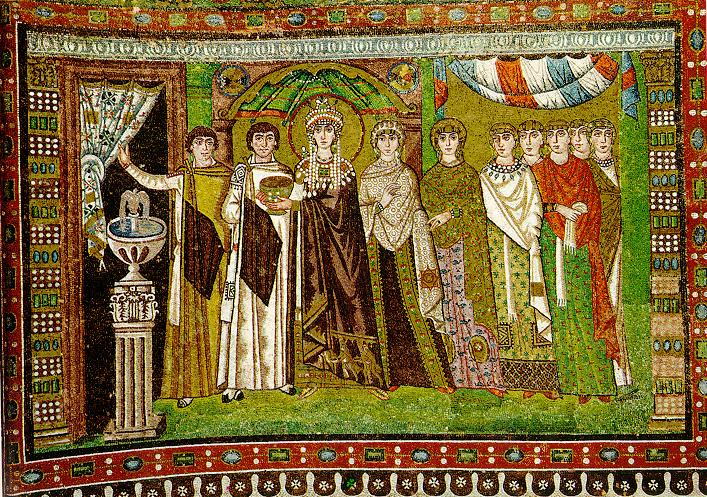
Throughout history, the role of women has been vital in shaping civilizations. Men, however, have always seemed to have superiority over women. The women of the Byzantine and Islamic civilizations were treated with decency and respect despite the common stereotype of men having control over the women. In the Islamic civilization, the Qur’an states numerous times that women should be treated with civility. The Qur’an especially highlights it well in section four verse nineteen. In the Byzantine civilization, the mural titled “Theodora and her Retinue” highlights the equality women have with men. The Byzantine and Islamic were treated with decency because their opinions were heard, and they had the opportunity to be something more than just house wives.

In the Islamic religion, the Qur'an serves as the essential guide to everyday life. All Muslims who practice the faith must follow it .According the Qur’an in section four verse nineteen it states: If you believe this, know that you are prohibited to inherit women if they do not want to be married to you. Your also are not supposed to treat them harshly and as if they are inferior. Allah does not want you to patronize the women, but treat them with kindness. If you hate your wife, you hate what Allah has deemed as good. It reiterates that women are not to be inherited. Unless the women are guilty of infidelity, then you need to treat them with affection. Again it reestablishes that if you hate your wife then you hate something that Allah has deemed good. Primary Source

Empress Theodora and her Attendants
In the Byzantine culture, they liked to express certain aspects of their way of life through artwork. Theodora was an important figure in shaping the lives of women because she was married to the Byzantine emperor Justinian. In mural entitled "Empress Theodora and her Attendants” there are seven women who are perceived as her ladies in waiting on her left and two men on her right. The mural makes Theodora the main focus by making her in the center. Theodora is wearing a purple robe which is a sign of royalty and of a respectable stature. According to Stan Rummel, a history professor at Texas Wesleyan University, the purple robes were usually only worn by men of a high social ranking such as her husband Justinian. This is significant to women because it symbolizes that women are equal with men. She has a halo around her head which symbolizes power. This was an empowering symbol to the Byzantine women because it gave them a sense of equality. Primary Source


Byzantine and Islamic women in everyday life

          I. Theodora was responsible for majority of laws favorable towards women.

                      a. made trafficking among girls and women illegal
                      b. made laws to give women more benefits in divorce
                      c. she regularly took time to visit with the common women to find out what she could do to better their lives
Theodora the voice of the women because she made their opinions known and found ways to help them have better lives.

          II. Muhammad's wives were a key part of the Islamic culture, Khadijah bint Khuwaylid, his first wife was viewed as the voice of the women.

                      a. made women have deeper knowledge of religion
                      b. helped women who were less fortunate 
                      c.  participated in political assemblies and suggested ideas benefiting women

         III. The Byzantine women not only took care of household, but they did separate activities 
                     a. ran businesses
                     b. participated in church activities

         IV. Since the Qur'an makes it clear that men should treat women with respect, many women wanted activate their right to do more that just raise a family.
                      a. participated in political assemblies


Works Cited

"Women in World History : MODULE 1." Women in World History : MODULE 1. N.p., n.d. Web. 14 Dec. 2013. <http://chnm.gmu.edu/wwh/modules/lesson3/lesson3.php?s=0>.

Connor, Carolyne L. "Women of Byzantium." N.p., n.d. Web. 14 Dec. 2013. <http://bmcr.brynmawr.edu/2005/2005-01-07.html>.

Hunt, Patrick. "Byzantine Art as Propaganda: Justinian and Theodora at Ravenna." N.p., n.d. Web. 18 Dec. 2013. <http://traumwerk.stanford.edu/philolog/2006/01/byzantine_art_as_propaganda_ju.html>.

Rummel, Stan. "The Express Theodora and Retinue. " N.p., 2007. Web. 18 Dec.2013. 
<http://faculty.txwes.edu/csmeller/humanexperience/ExpData09/03Biee/BieePICs/1ByzPICs/Ravenna/StVitale547/Theo01Ret497.htm>.

Fisher, Elizabeth A. "Women in the Byzantine Empire." N.p., n.d. Web. 15 Dec. 2013. <http://web.clark.edu/afisher/HIST252/Women%20in%20the%20Byzantine%20Empire.pdf>.

"Islams Women - Khadijah Bint Khuwaylid." Islams Women - Khadijah Bint Khuwaylid. N.p., n.d. Web. 16 Dec. 2013. <http://www.islamswomen.com/articles/khadijah_bint_khuwaylid.php>.

"Internet History Sourcebooks Project." Internet History Sourcebooks Project. N.p., n.d. Web. 18 Dec. 2013. <http://www.fordham.edu/halsall/basis/procop-anec.asp>.

"Women's Liberation through Islam." Women's Liberation through Islam. N.p., n.d. Web. 18 Dec. 2013. <http://www.islam101.com/women/womlib.html>.


Islamic Literature VS. Byzantine Literature

Coner McFarlin
12/19/13
History - block G
Primary source project - blog post


Literature was an important aspect of the Islamic and Byzantine cultures. People used literature to express ideas and share discoveries. When Islamic literature such as One Thousand and One Nights, or the Quran are compared to pieces of Byzantine literature such as writings of emperor Justinian, the structural and the ideational superiority of Islamic literature is evident. If literature was used as a window to look at each culture side by side, it would be evident that the Muslims progressed and learned at a much greater rate than the Byzantine people.


PRIMARY SOURCE BYZANTINE LITERATURE – Institutes, collection of Byzantine legal documents
We now come to another division relative to the rights of persons; for some persons are independent, some are subject to the power of others. Of those, again, who are subject to others, some are in the power of parents, others in that of masters. Let us first treat of those who are subject to others; for, when we have ascertained who these are, we shall at the same time discover who are independent. And first let us consider those who are in the power of masters.
1. Slaves are in the power of masters, a power derived from the law of nations: for among all nations it may be remarked that masters have the power of life and death over their slaves, and that everything acquired by the slave is acquired for the master.
2. But at the present day none of our subjects may use unrestrained violence towards their slaves, except for a reason recognized by law. For, by a constitutio of the Emperor Antoninus Pius, he who without any reason kills his own slave is to be punished equally with one who has killed the slave of another. The excessive severity of masters is also restrained by anotherconstitutio of the same emperor. For, when consulted by certain governors of provinces on the subject of slaves, who fly for sanctuary either to temples, or to the statues of the emperors, he decided that if the severity of masters should appear excessive, they might be compelled to make sale of their slaves upon equitable terms, so that the masters might receive the value; and this was a very wise decision, as it concerns the public good, that no one should misuse his own property. The following are the terms of this rescript of Antoninus, which was sent to Laelius Marcianus: The power of masters over their slaves ought to be preserved unimpaired, nor ought any man to be deprived of his just right. But it is for the interest of all masters themselves, that relief prayed on good grounds against cruelty, the denial of sustenance, or any other intolerable injury, should not be refused. Examine, therefore, into the complaints of the slaves who have fled from the house of Julius Sabinus, and taken refuge at the statue of the emperor; and, if you find that they have been too harshly treated, or wantonly disgraced, order them to be sold, so that they may not fall again under the power of their master; and, if Sabinus attempt to evade my constitutio, I would have him know, that I shall severely punish his disobedience.
PARAPHRASE:
This legislative writing, written by Byzantine emperor Justinian I, addresses the problem of slavery. Justinian suggests that while some people are independent, others must submit to their superiors. He then declares that slaves belong to their masters, and the masters have COMPLETE control over the slave’s lives. He does however go on to say no one may be extremely violent towards their slaves or punish them too severely. If a master is too harsh on his slaves, then he must sell them at a reasonable price, so that the general public benefits from the situation.


ISLAMIC LITERATURE PRIMARY SOURCE – Introduction to the Quran
1. In the name of God, Most Gracious,
Most Merciful.
The Cherisher and Sustainer of the Worlds;
And Thine aid we seek.
Thou hast bestowed Thy Grace,
Those whose (portion)
Is not wrath,
And who go not astray.

2. Praise be to God,
3. Most Gracious, Most Merciful;
4. Master of the Day of Judgment.
5. Thee do we worship,
6. Show us the straight way,
7. The way of those on whom


PARAPHRASE:
This is the introduction to the Quran, the religious book of the Islamic people, which was given to Muhammad by Allah, the god they believe in. This passage starts off pleading towards Allah, and is followed by praises directed towards Allah as well. These praises describe Allah as a nurturing, forgiving, and powerful god. Next, the writer states that he has worshipped Allah, and he seeks his help. He wants to live the way that Allah wants him to live, the path that will lead him to salvation. 

Link: http://www.sacred-texts.com/isl/htq/index.htm


OUTLINE

1) Intro to Islamic literature

     a) Islamic literature was highly diverse; it covered not only legal matters, but represented a wide range of ideas from religion, to legislative documents, to fictional works and folktales.


     b) Prose


          i) Most commonly used form of prose was called the maqamah. This was an elegant method of writing which rhymed, but was still considered prose.

     c) Poetry


           i) Five different types of poetry


               (1) Qasida 

                    (a) An ode of 20-100 verses, maintains a single end-rhyme throughout

               (2) Ghazel

                    (a) A short love lyric of 5-12 verses, meant to portray secular and/or religious ideas.

               (3) Qitah

                    (a) A form of poetry used to make jokes or for satire

               (4) Masnavi

                    (a) This is rhyming couplet. It was very popular because it allowed poets to tell a story by stringing thousands of verses together.

               (5) Roba’I

                    (a) Four line verse where lines 1, 2, and 4 rhyme.

     d) Transition

          i) All of these methods of writing culminated in unique and powerful literature. One example of the power of Arabic literature was One Thousand and One Nights.

2) One Thousand and One Nights

     a) The book One Thousand and One Nights was a collection of folk tales from all across Arabia, many of which were told by Persian Queen Scheherazade. 

     b) Literary Devices

          i) Frame Story

                    (1) A story in which the real plot is another story within a story

          ii) Embedded Narrative

                    (1) A character narrates a story about his/herself

          iii) Imagery

          iv) Foreshadowing

          v) Crime fiction and Horror elements

          vi) Science Fiction and Fantasy stories

          vii) Fate and Destiny

          viii) Humor 

     c) Importance

          i) These ideas were fairly new at the time, and if Islamic literature had not shaped them and improved so vastly upon them, modern literature would not be at the same place it is today.

     d) Transition

          i) Still, One Thousand and One Nights was not the only piece of literature that greatly influenced following years.

3) The Quran, the holy book of the Islamic people

     a) The Quran is one of the most unique books ever written. It does not follow any forms of Arabic poetry or prose and therefore is classified as neither.

     b) Religious influence

          i) This book taught Muslims to live how their god wanted them to live. It greatly influenced the religion and resulted in many more believers.

     c) Educational influence

          i) Because of the amazing uniqueness of the Quran, it has been studied for as long as it has been written. No piece of literature has been able to replicate the style of the Quran, since it does not fall under poetry or prose. 

     d) Transition

          i) While the Quran may be one of the most unique, universal, and influential pieces of literature, there were also pieces of Byzantine literature that remain noteworthy. 

4) Byzantine Literature Intro

     a) Byzantine literature was modeled after Greek Atticism, a rhetorical style of writing.

     b) Rhetoric

          i) Rhetoric is a very methodical writing style, in which an argument is developed, finalized, and presented.

          ii) This style of writing, which made up the majority of Byzantine literature, did not allow for expression of philosophic or theological ideas very well. Thus, legal and historical documents represented most of the writings in Byzantium.

     c) Genres

          i) Historical/Chronological

               (1) No passion or enthusiasm or personal connections, written by royalty or court members usually

          ii) Encyclopedias/essays

               (1) Very prominent in Byzantium, usually are dedicated to old artifacts or historical events.

          iii) Secular poetry

               (1) Poetry to do with ideas not concerning religion, rhetoric writing style did not allow for good expression of religious ideas.

               (2) Epigrams

                    (a) Brief statements meant to surprise or make fun of someone or something

               (3) Panegyrics

                    (a) Speeches made to praise someone or something, written and presented by the writer of the speech

               (4) Satire

                    (a) Lucian was the father of Byzantine Satire, which is a writing that uses irony to make fun of someone or something

               (5) Didactic

                    (a) Stories intended to teach morale lessons 

               (6) Begging-Poems

                    (a) Laments of authors, meant to express physical needs in a poetic form

     d) Transition

          i) These characteristics and categories of Byzantine literature showed a very superficial and methodical form of writing. However, there was still a small amount of deeper, less traditional Byzantine literature.

5) Theological/Philosophical poetry and popular poetry

     a) While most of Byzantine literature was very straightforward and superficial, popular poetry and theological poetry were a big part of Byzantine culture as well.

     b) Popular poetry

          i) After the capture of Constantinople, literature was totally reformed. Rhetoric style faded away which allowed for more popular ideas and horizons to be represented in literature. 

     c) Theological and Ecclesiastical literature

          i) Romanos was the main writer of theological writings, which was not very prominent at the time. 

     d) Transition

          i) Obviously, both cultures had complex and developed literature, but what could one infer about their cultures from this information?

6) Making Connections

     a) Both cultures maintained their unique styles of literature throughout their existences.

     b) Islamic Literature vs. Byzantine Literature

          i) After observing both styles of literature, it is obvious that the Islamic peoples were more thorough and more thoughtful in their literature, whereas the Byzantine peoples were not able to express deeper ideas through their literature.

          ii) This shows a higher educational level in the Islamic culture, which was a result of a superior society, and also a time advantage. 

     c) Transition
          i) Still, both cultures have shaped our modern-day lives in ways we could not begin to understand.


MLA Bibliography
  • Halsall, Paul. "Medieval Sourcebook: Selected Sources." Medieval Sourcebook: Selected Sources. Fordham University, n.d. Web. 18 Dec. 2013.
  • "ISLAMIC LITERATURE." ISLAMIC LITERATURE. Cornell University, n.d. Web. 18 Dec. 2013.
  • "Hypertext Qur'an." Hypertext Qur'an. N.p., n.d. Web. 18 Dec. 2013.
  • "Byzantine Literature." Wikipedia. Wikimedia Foundation, 13 Dec. 2013. Web. 18 Dec. 2013.
  • "Islamic Literature." Wikipedia. Wikimedia Foundation, 30 Nov. 2013. Web. 18 Dec. 2013.


Friday, September 20, 2013

Do time and distance impact someone’s popular perception?

     Actions that have been completed in the past and thought at the time to be acceptable might not be thought as such in modern times. The way something is perceived at one time can greatly differ from the way that the same thing is looked at in the modern perspective. Perception can change for the better or the worse. Time and distance play a major role in whether something is viewed positively or negatively. Time can, as shown repeatedly in the past, impact the modern popular perception of an item, empire, action or even a single individual. There are specific examples of this that apply to everyday life as well as more broad examples that have changed history.

Smoking advertisement in the
early 1900's
A 'Closed' sign for the violation
of the Prohibition act in the 20's
     As time goes on, one thing can go from completely normal and socially acceptable to something not seen as such. There are many examples of this that are relevant in everyday life. One example of this that we see in everyday life is smoking. in the 1930's and 40's, the risks of smoking were unheard of, and the majority of people smoked. Even most physicians smoked. In advertising, companies tried to assure consumers that their brand of cigarette was without risk. Now, not only are the dangers of smoking well-known to the general public, and most people avoid smoking altogether, companies are socially and legally forbidden to advertise falsely. Another example of how perspective has changed over time towards an item is alcohol. From 1919 to 1933, it was even an amendment to the U.S. Constitution to outlaw alcohol. Now, although there are recognized risks to the use of alcohol, it is legal and anyone the age of 21 and over can drink it. As well as some everyday examples, there are a lot of examples that have had a major impact on our country alone.


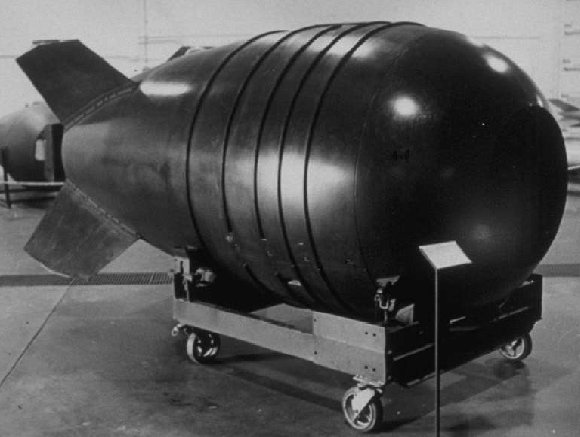
A picture of the Nuclear bomb
used in WWII
     The perspective of some things that have changed over time have affected the course of world history. One example of this is slavery. In the past, slavery was viewed in society as acceptable. Although there were always some who were against it, in the eyes of the general public at the time, slavery was ok. The people who could afford them, had them, and the people who couldn't afford them, had no problems with the others having them. Now, after the U.S. civil war, slavery is looked at with disgust. People disdain the thought of having slavery in their country's past. And people also dislike the concept that some countries still have slavery today. Another prominent example of something that is viewed much differently today are weapons of mass destruction. In WWII, nuclear weapons were used against the Japanese to end the war. At the time, the U.S. thought that the bomb was necessary and acceptable to use in the war. There is still much discussion today on whether or not the bomb was necessary. There is even an international agreement not to use nuclear, chemical, or any other types of weapons of mass destruction.

     Over time, there have been many examples of how the perspective of things have changed. These examples are just like how the perception of Alexander the Great may have changed. Since his time, the stories of him have been looked at through many different points of view. Some of these perspectives have highlighted his greatness, and some of them have focused on his not-so-great attributes. Over all, there is evidence that Alexander was great in some ways, and not in others. And the way people view these different aspects are subject to change over time and distance.

Sources
Gardner, Martha N., PhD, and Allan M. Brandt, PhD. "“The Doctors’ Choice Is America’s Choice”." NCBI. US National Library of Medicine National Institutes of Health, Feb. 2006. Web. <http://www.ncbi.nlm.nih.gov/pmc/articles/PMC1470496/>.

"Prohibition in the United States." Wikipedia. Wikimedia Foundation, 18 Sept. 2013. Web. 20 Sept. 2013. <http://en.wikipedia.org/wiki/Prohibition_in_the_United_States>.

"Slavery in the Colonies." Slavery in the Colonies. N.p., n.d. Web. 20 Sept. 2013. <http://tdl.org/txlor-dspace/bitstream/handle/2249.3/663/05_slavery_colonies.htm>.

"Geneva Conventions." Wikipedia. Wikimedia Foundation, 09 Aug. 2013. Web. 20 Sept. 2013. <http://en.wikipedia.org/wiki/Geneva_Conventions>.


Does Alexander deserve to be called “Great”?

     Did "Alexander the Great" deserved to be called "great"?The society that lived in Philip II/ Alexander period thought that he deserved to be called "Alexander the Great". I believe that he did deserve to be called "Great" ,because he was a young military genius. He conquered many cities with power and courage. "Alexander the Great" shows how he deserved to be called "great" from conquering land and inventing new weapons to overcome his enemies.

     Even though he was young, age 20 when he became king, he accomplished many things like conquering Persia,one of the strongest cities in his time. He invented new weapons that he could have an advantage over his enemies.His first conquer was the Greek Empire and this is when everyone started to call him "great". He conquered Persia twice that is why he was called the "Great Persian Empire"."Alexander the Great" had many inventions like the siege tower which helped him and his army destroy the walls of Tyre and pass over.He invented the He also invented the Torsion catapult which would break the walls of a city. "Alexander the Great", used the Torsion catapult to break down the walls of Tyre and defeat them.The inventions would help him overcome his enemies that is why he is "great".

     Even though Alexander was great,he had a father, Philip II, that was king and had accomplished many things like the beginning of conquering the Greek Empire. People say that Alexander's "Greatness" really was just his fathers. Philip II was also great because he conquered many lands.Mahatma Gandhi was "great" just like Alexander.He believed in nonviolent and peaceful protests.Mahatma Gandhi was like "Alexander the Great" because he lead India to independence and inspired movements for civil rights and freedom across the world. 
     
     "Alexander the Great" deserved to be called great because he did many things like inventing new inventions and taking over cities and lands during his time.He was the best leader during his time and he inspired many people.He has influenced many leaders to be as "great" as him.


Sources
Ghoshal, Bobby. N.p.. Web. 25 Sep 2013. <http://bobbyonboard.com/what-made-alexander-the-great-so-great-anyway>.

Eugene , B.. N.p.. Web. 25 Sep 2013. <http://www.history.com/topics/alexander-the-great>.

Vinay, L., and L. Vinay. N.p.. Web. 25 Sep 2013. <http://www.sscnet.ucla.edu/southasia/History/Gandhi/gandhi.html>.


The Ups and Downs of Popular Perception

Do time and distance impact someone’s popular perception?
Time and distance impact someone’s popular perception, especially Alexander’s. Popular perception can affect the way people think about someone. In Alexander’s case, It affected him in a positive way, but it affected his father, King Phillip, in a negative way.
     People from across the lands knew about him. His stories were told over and over again, every time becoming more vivid. Athletes today remind me of Alexander the Great, specifically Johnny Manziel. Johnny started earning great achievements at a young age. Like Alexander, he took on a huge challenge. He faced the number 1 ranked team in college football, Alabama, and came out victorious. Everyone was talking about him, telling their friends. They made him seem like a god. Later he was awarded with the Heisman trophy. From then on, every team was afraid to play the great Johnny Manziel. But time and distance does not always have a positive effect on a person.
Alexanders father, King Phillip II, had many rumors about him. He was a great ruler, but there were rumors that he was cheating on the queen. The word spread around and everyone talked about it. Soon after, Phillip was killed by his own body guard. This reminds me of todays government, specifically Anthony Weiner. Anthony also had allegations going around that Anthony put inappropriate pictures on the internet. The news was all over it, telling everyone that owned a television. People were talking, Anthony had to apologize, and no one voted for him. To this day, there are still rumors going around about what Anthony did or didn't do and they are slowly getting worse over time.
Overall, popular perception drastically affected peoples opinions about Alexander and Phillip. However, it applies today too. Whether we like it or not there is gossip, rumors and exaggerations. Maybe we should pay less attention.


Citations:

. N.p.. Web. 25 Sep 2013.
      <http://en.wikipedia.org/wiki/Alexander_the_Great

Lendering, J.. N.p.. Web. 25 Sep 2013. 
     <http://www.livius.org/aj-al/alexander/alexander_t72.html>.

. N.p.. Web. 25 Sep 2013.     <http://theworldofalexanderthegreat.wordpress.com/2012/07/20/happy-birthday-alexander-the-great-2021-july-356-bc/>.

What can one learn about the values of society based on their views of greatness?


 THE VALUES OF A SOCIETY BASED ON THEIR VIEWS OF GREATNESS


   A person who is classified as great, or was in a certain time period, most likely had traits or skills that were admired by people at the time. They would also most likely have to use these traits do something for the good of others. However when a person is considered great to a certain group of individuals, that doesn't mean he was considered as such in his time, or will always be in the future.
Bust of Alexander the Great
       Before we answer this question, we must first attempt to answer the question of whether Alexander was actually great. Alexander did great things. He achieved his father's dream of taking over Persia and was a good leader. He kept all the citizens in his territory in line by being ruthless to traitors but fair to those who exhibited potential. He created a beautiful merge between the different cultures of his empire These were traits that were greatly admired, and made Alexander famous, though it was that he used them to do such amazing things which is what made him a valued figure in the community. Philip II did much for Macedonia being the ambitious man that he was, and his son Alexander carried this trait to. He was striving for the things his father had been striving for, he inspired his people and fought bravely. Basically, he held a similar set of traits to his father, who was the best leader Macedonia had seen in ages, and he did things the way his father had and would have done them, and since everyone had loved Philip it would make sense that they would love his son as well.
Adolf Hitler
       However, we cannot attribute Phillip II for all Alexander's greatness. He was quite similar to another leader, who was greatly admired for a number of  reasons, even if we refuse to admit it. Adolf Hitler was charismatic and intelligent, after Germany had been defeated in World War I they felt a lack of pride in their country and were blamed for the brutality of the war, causing them to have massive war debt. In came Hitler who spoke to them in an assuring manner and said he could fix their problems. This is the same as Alexander's situation because after his father had died, had Alexander not stepped in, many people may have feared they would go back to the way things were before Phillip's rule. Hitler protected the people of Germany so in turn the people protected him from being seen in a bad light. In Macedonia people probably feared Alexander because he was known for being ruthless with traitors, so they didn't exactly want to get on his bad side.
       In conclusion, one can tell the values of a society by the traits of the people they classify as great, independent of what time period the person came from. As much as a person is great, he may not be considered so until later, he may not always be considered it, or he may never get the recognition he deserves. I'm sure there are many people who have the ability to be great, but aren't given the opportunity to try or never get the recognition they deserve.


Borza, Eugene. "Alexander the Great." History.. History., n.d. Web. 20 Sep 2013      
     <http://www.history.com/topics/alexander-the-great>.

Fascist Personality Cults. Diss. University of Michigan, Web.   
     <http://sitemaker.umich.edu/fascistpersonalitycult/adolf_hitler>.

"Alexander the Great." Engineering an Empire. History: 27 Mar 2007. Radio.   
     <http://www.youtube.com/watch?v=aELQNHNgdKs&safe=active>.

Question 3: Do time and distance impact someone’s popular perception?

Question 3: Does time and distance have a impact on people's popular perception?

Do historical figures get a reputation they don’t deserve? Many historical figures were not who historians said they were, like Ivan the Terrible, and Napoleon. Both of these men had leadership positions like Alexander, and Napoleon fought other countries to gain land.
Ivan the Terrible got his "terrible" reputation because Ivan’s name was missed translated from from Russian to English. It was translated from Russian to English incorrectly. In Russian it was Ivan the “formidable”, which is more like having respect because of size, strength or ability. But in English, his name in Ivan the terrible. This means that he was respected because of his stature and strength. Also, although many Americans would say otherwise, Napoleon was not short, he was actually 5 ft 5 in tall, which in his time is extremely tall. The error occurred when they were converting from French units to English units. At the time, a French foot was larger than an English foot so people heard 5' 2" and it stuck.
Graphic: World leaders' heights
Napoleon was tall for his time. This is how he compares to leaders of  today. 
Imagine him without the hat. 
So, what if Alexander the Great was not actually great? What if his legacy got lost in time, like Ivan's, or was altered as it passed from one person to another. How much would this change how we also looked on famous or infamous people of history? If Alexander's legacy was altered, would we still call him great, or would we frown upon him?
Sources:  
Strickland, Joseph. n. page.  
<http://www.lagrange.edu/resources/pdf/citations/2012/09_Strickland_History.pdf>. "FAQ." Foundation Napoleon. (2008): n. page. Web. 20 Sep. 2013. 
<http://www.napoleon.org/en/essential_napoleon/faq/>

BBC News, . How World Leaders Measure Up. 2009. Infographic. Sarkozy height row grips FranceWeb. 25 Sep 2013. 

     <http://news.bbc.co.uk/2/hi/8243486.stm>.