Thursday, December 19, 2013

Islamic and Byzantine Art and Religion


Islamic and Byzantine Art and Religion: Grace LaFrentz


I. Introduction
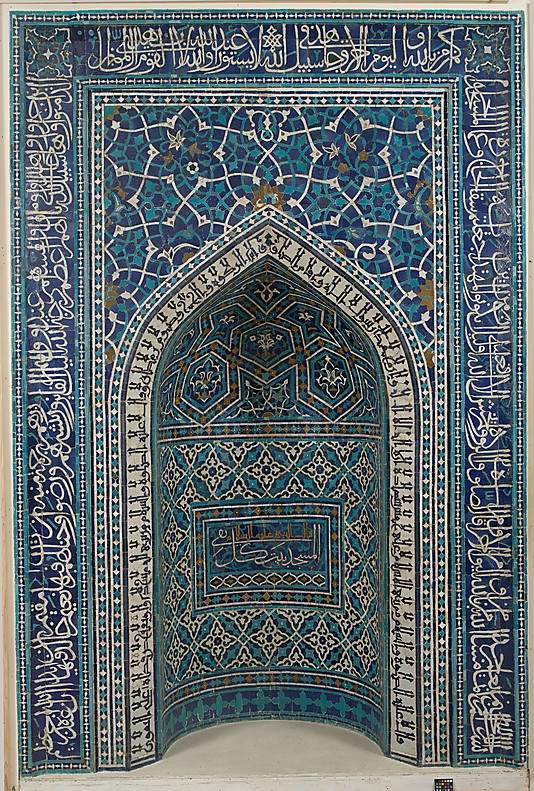
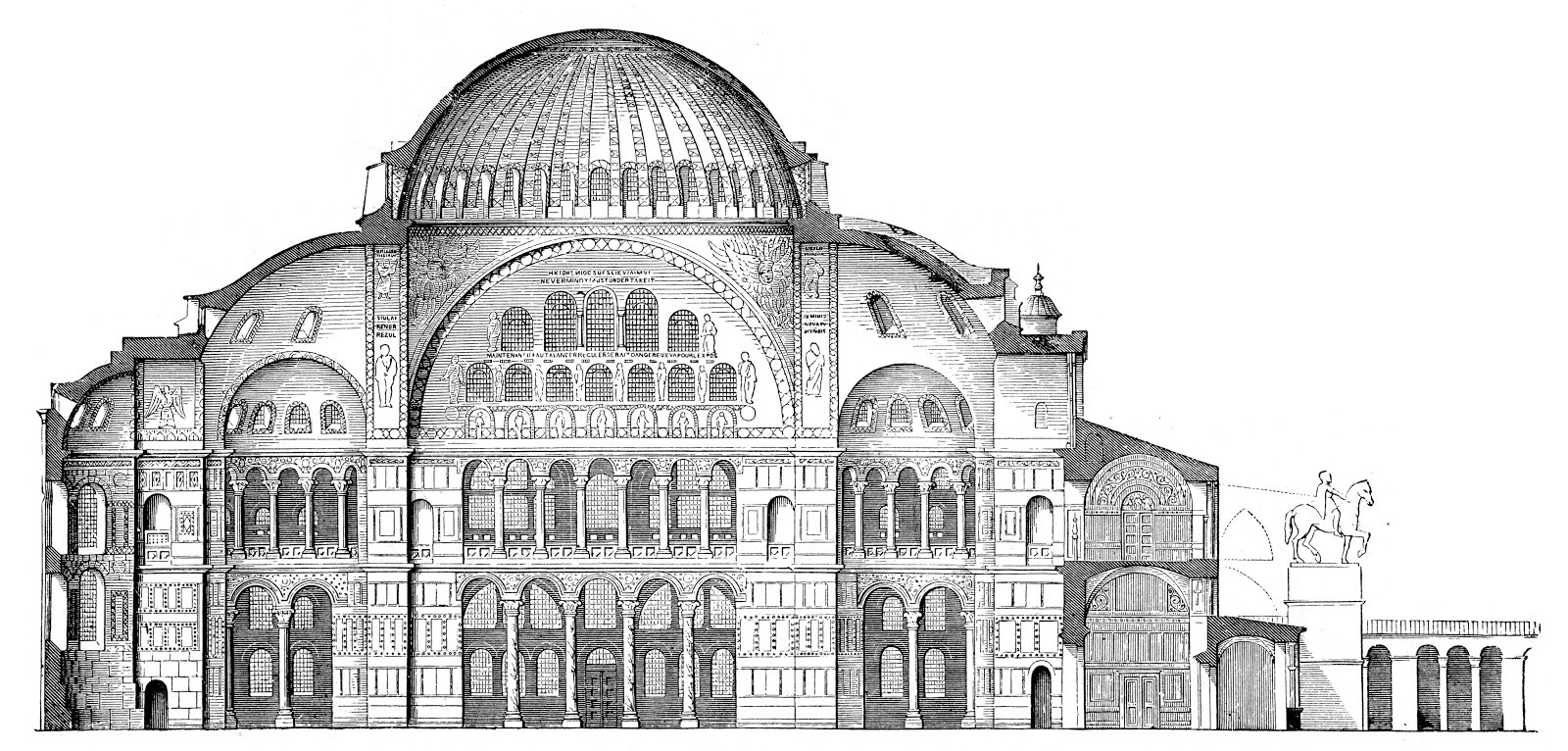
What does the art of a culture say about the extent of its religious devotion? Often, the designs and rules of art exist to honor the religion of the artist. Art from the Islamic Civilizations, for instance, was strictly patterned and had rules in respect to Allah. One of the most influential pieces of Muslim art is the Muslim Prayer Niche because it includes so many elements of Muslim Art, such as calligraphy and geometric patterns. Art from the Byzantine Empire was “religious and imperial,” and put emphasis on aspects of art that artists felt would please God. One of the best representations of art from the Byzantine Empire is the beautiful Hagia Sophia  because of its “harmony” and “workmanship.” Though art from the Islamic Civilizations and the Byzantine Empire were stylistically different, they both conveyed through their respect and intricacy how greatly each group valued its religion.


  1. First Body Paragraph: The Islamic Civilizations
    1. Topic Sentence: Art from the Islamic Civilizations had strict rules about what was acceptable to draw, demonstrating the importance of the Muslims’ respect towards Allah.
      1. Aspects of Islamic Art


    1. Muslim Prayer Niche
      1. Includes aspects of many elements of Islamic art
    2. Paraphrase of Secondary source (description of the Muslim prayer niche): According to the Metropolitan Museum of Art, this prayer niche is an incredibly important piece of religious Islamic art for several reasons. One is that it includes so many elements of traditional Islamic art. It is made up of ceramic tiles, painted with “intricate arabesque and calligraphic designs.” Another reason this piece of art is important is because of its historical value. It used to be a part of a wall in a "theological school in Isfahan” and was used for prayer to Allah. It is also one of the first pieces found that uses "moasic tilework."
  1. Allah
    1. Since Allah was worshipped directly, Muslims were not allowed to draw Allah.
    2. Drawings of people are uncommon in Islamic art because Muslims believe that only Allah can create people. This demonstrates how much the Muslims respected Allah, because they were willing to give up some of the freedom of art in order to make sure they did not disrespect him.
    3. The Muslim prayer niche is intricate and beautiful, but does not contain any pictures of humans or Allah.
  2. Calligraphy
    1. The Muslim prayer niche has calligraphic designs drawn all over its tiles. The calligraphy on it is used for several reasons. The first is that it helps create an aesthetically pleasing design with an almost floral appearance. The calligraphy also has a more practical purpose, as it is probably a prayer.
  3. Geometric Patterns
    1. Complex and intricate patterns showed balance and symmetry  which conveyed beauty.
  4. Arabesques
    1. Geometric floral patterns


  5. I. Second Body Paragraph: The Byzantine Empire
    1. Topic Sentence: Byzantine art was regal and formal, but was still crafted with the purpose of pleasing God.
      1. Aspects of Art from the Byzantine Empire
        1. Primary Source: The Hagia Sophia
        2. a. According to Procopius, When Justinian was the emperor, some of the people from the lower classes rebelled against him and burned down the Sophia church to prove they did not care about God. Justinian claimed the only reason God let the church be burnt down was because God knew this would be a good opportunity for an even more beautiful church to be built. Justinian spared no expense to have only the best materials used and the best architects design the church. It was even said that if the old church was still there and the people had seen the layout of the new church, they would have burned down the old church anyways.
          1. According to Procopius, the church was built by Justinian, who built it “regardless of expense.” This proves how much the people cared about it being perfect for God, because they would pay any price to have it built correctly.
        3. Mosaics
          1. The Byzantine mosaics were created to send a message. Huge    mosaics of Christ and his apostles were often hung at the entries of churches to show the people how important Christ was to them.
          2. There were several huge mosaics hung in the Hagia Sophia. One of the most famous of these is the Deesis Mosaic.
        4. Many paintings, portraits, relief carvings, and statues
        5. Christ
            1. They were used in worship


MLA Bibliography:


Hoare, Timothy. "Byzantine and Islamic Civilizations." Dr.
Timothy D. Hoare, Ph.D. Professor of
Humanities Johnson County Community
College. Microsoft Front Page. Web. 18 Dec


Selby, Sara. "Humanities 2111, Unit 4: Byzantine and
Islamic Civilizations." HUMANITIES 2111.
Waycross College. Web. 18 Dec 2013.


Smithsonian, . "Gallery Guide Arts of the Islamic World."
Freer Gallery of Art and Arthur M. Sackler
Gallery. Smithsonian Institute, n.d. Web. 18 Dec


Drew, Pippa, and Dorothy Wallace. "Lesson 5 Art part:
Islamic art." Pattern. Dartmouth College, n.d. Web.
18 Dec 2013.


RodriguezArt, . "ISLAMIC AND BYZANTINE."
slideshare. SlideShare Inc, 12 Oct 2012. Web. 18
Dec 2013.


Sabau, Isabelle. "The Power of Symbolism in Byzantine Art."
ΠAIΔEIA . Paideia. Web. 18 Dec 2013. <http://www.bu.edu/wcp/Papers/Aest/AestSaba.htm>.


McCay, . "Middle Ages II Byzantine Empire Sources."
McCa'ys History Class Website South Allegheny
School District. N.p.. Web. 18 Dec 2013. <http://www.southallegheny.org/webpages/jmccay/resources.cfm?


Atchison, Bob. "Discovery, History and Conservation - The
Christ Deesis Mosaic in Hagia Sophia." Hagia
Sophia The Deesis Mosaic. Pallasart Web Design -
An Austin Web Design Company. Web. 18 Dec


Wilkinson, Michael. "Geometric Design in Islamic Art." The
Metropolitan Museum of Art. The Metropolitan
Museum of Art, n.d. Web. 18 Dec 2013.


Hinkle, V.. "Islamic Art." . N.p.. Web. 18 Dec 2013.

Metropolitan Museum of Art, . "Mihrab (Prayer Niche)."
Metropolitan Museum of Art. Metropolitan
Museum of Art. Web. 18 Dec 2013. 
<http://www.metmuseum.org/collections/search-the-


PBS, . "Art." pbs.org. pbs. Web. 19 Dec 2013.  
<http://www.pbs.org/empires/islam/cultureart.html>.


2004 Board of Trustees, . "ISLAMIC ART AND
CULTURE (A RESOURCE FOR TEACHERS)." .
The University of Chicago, n.d. Web. 18 Dec 2013.

Islamic and Byzantine Culture

Islamic and Byzantine Religious leaders

     The Byzantine empire and the Islamic Culture both had very interesting contrasting or comparing aspects. During the fall of Roman empire a group call the Byzantines and the Muslims either followed or created a new religion. The Byzantines followed the Jewish religion, Christianity, and they look at Jesus as he is the superior one. The Muslims followed the religion of Islam and their leader Allah. One of the most interesting ones is that the Islamic Culture and the Byzantine Empire both are very religious and look very highly upon their leaders.


Primary Source 1:             And be conscious of the Day on which you shall be
brought back unto God,whereupon every
human being shall be repaid in full for what he
 has earned, and none shall be wronged;

Paraphrase 1:  According to The Message of THE QU’RAN translated by Muhammad Asad, when one dies they will be brought back into heaven and meet God, also know as Allah. Everyone will receive the afterlife that they deserve. No afterlife will be wrong because Allah is the greatest and makes no mistakes.

Primary Source 2:

Paraphrase 2: According to the website: Introducing Islam, the engraving of a man with a ring around it resembles that Jesus is the king of all kings in the Byzantine Orthodox Church. The cross with all the buildings around it resembles the close relationship that Jesus has with the Byzantine state.

First Body Paragraph: Allah is the superior leader of the Islamic religion and is looked up to as the father of the religion
a. Allah makes no mistake, everything he does is perfect
b. Everyone gets to meet the superior God when they die
People that believed in Islam will meet Allah when they die because all believers' souls meet Allah when they die

Second Body Paragraph: Jesus protects the Byzantine empire and knows everything that happens in the states.
a. Jesus is the king of all kings
b. The relationship between the state and Jesus himself is a tight bond


Sources:
Asad, Muhammad. "Institute of Islamic Banking and Insurance - Vision of Qur'an." Institute of Islamic Banking and Insurance - Home. Web. 16 Dec 2013. <http://www.islamic-banking.com/arts-and-islamic-world.aspx>.

Marshal, Hodgson. "Introducing Islam." - Additional Material. Introducing Islam, 2013. Web. 17 Dec. 2013. <http://cw.routledge.com/textbooks/9780415455183/additionalmaterial_chapter2.asp>.
Introduction:
Two countries are fighting to grow, both demanding money from the people. The Byzantine Empire was trying to expand, but could not fund their great plan. They had to find new ways to tax the people to support the empire. In the Islamic Civilization the native tribes were forced to pay taxes. The empire used them as a pillar to hold up the entire civilization. The Byzantine taxation was evenly distributed across their population. The Islamic taxation was focused on the nomadic people, Muslim or not. One of my primary sources is a stone slab with the Byzantine laws engraved in it. My other source is an Islamic rug with red, white, black and blue diamonds and spheres woven into it. Both sources are a reflection of the taxation in the empires.
First body paragraph:
The Byzantine Empire was very organized and fairly taxed everyone. Oneof the heaviest taxes was the hearth tax. This held the empire up for yearsbefore the expansion. It was charged to the residents to pay the tax. The expansion still needed money, and the hearth tax was not enough. There were new taxes put in place. There were taxeson inheritances, judicial fines, and customs duties. This greatly increased the income of the empire to support their plans. My primary source depicts an organized document that was the Byzantine law for taxation. Even the monks were taxed, spreading the burden over everyone, not just a single group. This made life easier on everyone, allowing them to carry on with their lives, instead of filling their heads with tax worries.

Transition statement:
However, in other empires, the tax was used as a weapon and focused on one group.

Second body paragraph:
The Nomadic tribes were told that taxes were a necessary condition for belonging in the Islamic community. Over time the Islamic state started depending on the tax from the tribes. The taxation was used as a weapon to control the nomadic peoples. The government took more tax off of the population and put more on the tribes. Before Abi Waqqas waspromoted to commander he was in charge of the taxation of the Hawazin tribe.Most tribes were challenging to stop and tax because catching them wasproblematical. Taxing them was difficult, but it was eventually accomplished bywaiting for the tribe at the drinking well and forcing them to pay. The tribe had no Islamic currency, so they were forced to pay with their camels. Rugs, such as my primary source, were too expensive for the nomadic tribes to afford because of the heavy taxation.
Transition Statement:
Overall, the Islamic Empire found ways to siphon all of the money out of taxation, but so did the Byzantine.

Conclusion:

The Byzantine taxation was evenly distributed across their population. The Islamic taxation was focused on the nomadic people, Muslim or not. The Islamic taxation took advantage of the nomadic people, while the byzantine taxation was fairly distributed to every citizen. The tribes close to the Islamic empire were stolen from. In the Byzantine Empire they came up with better ways to tax the people. The Byzantine Empire was more organized and fair than the Islamic empire. 
Hunter Harton 
12/19/2013
Primary Source Argument Project


Two countries were fighting to grow, both demanded money from the people. The Byzantine Empire was trying to expand, but could not fund their great plan. They had to find new ways to tax the people to support the empire. In the Islamic Civilization the native tribes were forced to pay taxes. The empire used them as a pillar to hold up the entire civilization. The Byzantine taxation was evenly distributed across their population. The Islamic taxation was focused on the nomadic people, Muslim or not. One of my primary sources is a stone slab with theByzantine laws engraved in it. My other source is an Islamic rug with red,white, black and blue diamonds and spheres woven into it. Both sources are a reflection of the taxation in the empires.
            The Byzantine Empire was very organized and fairly taxed everyone. One of theheaviest taxes was the hearth tax. This held the empire up for years before the expansion. It was charged to the residents to pay the tax. The expansion still needed money, and the hearth tax was not enough. There were new taxes put in place. There were taxes on inheritances, judicialfines, and customs duties. This greatly increased the income of the empire to support their plans. My primary source depicts an organized document that was the Byzantine law for taxation. Even the monks were taxed, spreading the burden over everyone, not just a single group. This made life easier on everyone, allowing them to carry on with their lives, instead of filling their heads with tax worries. However, in other empires, the tax was used as a weapon and focused on one group.
            The Nomadic tribes were told that taxes were a necessary conditionfor belonging in the Islamic community. Over time the Islamic state started depending on the tax from the tribes. The taxation was used as a weapon to control the nomadic peoples. The government took more tax off of the population and put more on the tribes. Before Abi Waqqas waspromoted to commander he was in charge of the taxation of the Hawazin tribe.Most tribes were challenging to stop and tax because catching them wasproblematical. Taxing them was difficult, but it was eventually accomplished bywaiting for the tribe at the drinking well and forcing them to pay. The tribe had no Islamic currency, so they were forced to pay with their camels. Rugs, such as my primary source, were too expensive for the nomadic tribes to afford because of the heavy taxation. Overall, the Islamic Empire found ways to siphon all of the money out of taxation, but so did the Byzantine.

            The Byzantine taxation was evenly distributed across their population. The Islamic taxation was focused on the nomadic people, Muslim or not. The Islamic taxation took advantage of the nomadic people, while the byzantine taxation was fairly distributed to every citizen. The tribes close to the Islamic empire were stolen from. In the Byzantine Empire they came up with better ways to tax the people. The Byzantine Empire was more organized and fair than the Islamic empire.


NA, . N.p.. Web. 19 Dec 2013. <http://www.persianrugllc.com/history-of-persian-of-rug.php>.
Torrissen, Bjorn. N.d. 0. n.p.
. N.p.. Web. 19 Dec 2013. <http://www.shsu.edu/~his_ncp/MunByz.html>.
Metin CoÅŸgel, Rasha Ahmed, and Thomas Miceli, . N.d. 0. n.p.

Art: Political or Religious? *


A.    Introduction Paragraph: Hubristic tendencies are often believed to be immoral and offensive. However, can they be useful? In the Byzantine Empire, placing Jesus Christ on the back of a coin that also contained their ruler was not considered offensive. Instead, it was a political tactic. Here rises the question: should art be political or strictly religious, such as the Qur’an in Islamic civilizations? The Islamic civilizations and Byzantine Empire were both heavily dependent on their art. The Byzantine Empire used works of art to promote their political beliefs, while the Islamic civilizations used calligraphy in their art to worship their god, Allah.

B.   Body Paragraph One: Byzantine Empire
a.       Topic Sentence: In the Byzantine Empire, which was the successor of the Roman Empire until Justinian’s rule, most of the art supported politics.
                                                               i.      Propaganda through Art

a.       The political advantages of having huge mosaics their beliefs were massive. Using these mosaics (obvious, eye-catching, powerful works of art), Justinian emphasized the power behind the emperor as a leader, as opposed to using art to exclusively worship Jesus Christ.
                                                               i.      Primary Source
                                        
1.       Paraphrase One: This gold Byzantine coin includes an image of Jesus on one side, holding a Gospel, and the emperor Justinian II on the reverse side. Justinian is dressed in regal robes and holding a cross. There are markings on both sides of the coin, of what looks to be writing or letters of the alphabet.  Justinian as a ruler was rather cruel, but effective in many ways. He was the first to use the image of Jesus Christ, proving to be pioneer in political development. According to the Archaeological Museum in Istanbul, the idea of using an image of Jesus was so ground-breaking because “with so much traditionally imperial land under the sway of the Muslims, it was considered an effective PR tool.” This “PR” tactic was necessary because the Byzantine Empire’s main focus was spreading the religion and the ideas of Christianity. These coins would circulate throughout the entire world, therefore exposing and introducing more and more people to Christianity, as Justinian II hoped. Furthermore, Justinian’s choice in placing himself on the opposite side of Jesus shows his hubristic nature, or the belief that one is equal to or better than a god.
2.       Concluding Sentence: Using this gold coin and the Justinian and Theodora mosaic, we can conclude that the Byzantine Empire used most of its art to advocate its political principles.
1   C. Body Paragraph Two: Islamic Civilizations
a.       Topic Sentence: The Islamic civilizations used artistic calligraphy to respect the authority of Allah as the all-powerful god.
                                                               i.      Muslims frowned upon icons or drawings of Allah
1.  Believed Allah should be worshipped directly
2. Only Allah can create living things
a. Qur’an
                                                               i.      Primary Source
                                      
1.      Paraphrase Two:  This image is an excerpt from a folio of the Koran from the 9th-10th century. The verse is from the end of the second sura (chapter) of the Koran, known as al-Buqara (The Cow). It is a sheaf of yellowed parchment, with thick, black letters. There are red dots around most of the letters, and there is a gold medallion in the bottom left corner of the writing.  Arabic is read from right to left, with an alphabet of twenty-six letters, of which three are long vowels. Short vowels are indicated by small symbols above or under the letters themselves. The red dots on this excerpt are the indicators of short vowels. According to the Freer Gallery of Art and the Arthur M. Sackler Museum of Art, the early Koran’s shape “responds to the natural flow of kufic script that calls for long, horizontal strokes”. This would explain why the writing was long, and read left to right. Finally, the medallion in the bottom left corner indicates that this passage is its own section of text. 
a.       Calligraphy
                                                                                                                        i.      Used to beautify writings, both from the Qur’an and elsewhere (used in mosques, palaces, homes, and businesses)
                                                                                                                        ii.      Primarily, exclusively from the Islamic world
                                                                                                                        iii.  “the Arabic script was continuously refined and imaginatively embellished to become the most recognizable and ubiquitous symbol of Islam”

Concluding Sentence: Using calligraphy, the Islamic civilizations expressed their respect for Allah as the sole figure of authority and leadership through their art.


MLA Citations

Yalman, S.. N.p.. Web. 15 Dec 2013. <http://www.metmuseum.org/toah/hd/abba/hd_abba htm>.


Freer Gallery of Art and Arthur M. Sackler Museum of Art, . N.p.. Web. 18 Dec 2013.<http://www.asia.si.edu/exhibitions/online/islamic/calligraphy1.htm>.

Brooks, S.. N.p.. Web. 18 Dec 2013. <http://www.colostate.edu/orgs/MSA/find_more/islart.html>.

Arkenberg, J.. N.p.. Web. 17 Dec 2013. <http://www.metmuseum.org/toah/hd/byza/hd_byza.htm>.

Siddiqui, E.. N.p.. Web. 18 Dec 2013. <http://www.fordham.edu/halsall/byzantium/>.


Islamic Art Vs. Byzantine Art

Mosaic of Christ Pantokrator, in Hosios Loukas.


 Decoration in the Grand Mosque in Kuwait

The Islamic culture and the Byzantine empire both greatly believed in representing their faith through their art. The decoration in the Grand Mosque in Kuwait is a magnificent example of the religious intent in Islam. This decoration consists of arabesque, which is a floral pattern, geometric shapes, and bright colors.  The mosaic of Christ Pantokrator, in Hosios Loukas is a prime example of how the Byzantine Empire represented their faith. This image depicts Jesus in front of a gold background with a halo around his head and uses very sombre tones. The Islamic culture better represented its spirituality through its art than the Byzantine empire because it was more about representation than realism.

In Islam, art is more spiritual than physical.

  • The art used geometry and floral patterns because they best represented the infinity of Allah and because iconography was forbidden as idolatry.
  • It isn't art for art’s sake but is part of objects in their daily life. The use of these objects reminds them of their spirituality.
By utilizing geometric shapes and arabesques rather than figures, Islamic art has a more divine  quality than Byzantine art.
 
The Byzantine empire’s religious art had more of a physical appearance.

The Byzantine’s used simple people and figures in their art to show their faith.
Their art showed remarkable homogeneity .
Instead of using geometric shapes the Byzantine’s used icons and lavish colors like gold and silver to represent the wealth and power of God.

By the Byzantine’s using figures and people in their art, they gave off more of a physical feel in their art rather than a spiritual one.


Hussain, Z.. N.p.. Web. 19 Dec 2013. <http://www.bbc.co.uk/religion/religions/islam/art/art_1.shtml>.

. N.p.. Web. 19 Dec 2013. <http://www.britannica.com/EBchecked/topic/87136/Byzantine-art>.

"Byzantine Art." Byzantine Art. N.p., n.d. Web. 19 Dec. 2013.


Wednesday, December 18, 2013

Byzantine vs Islamic Architecture:

Alex Baugh
12-19-13
History G Block
Byzantine vs Islamic project

Introductory Paragraph

   Architecture was very important to both Islamic and Byzantine cultures. Both have strong examples of excellent architecture, however their methods differ in some ways. The Byzantines with the Hagia Sophia, and the Muslims with the Great Mosque of Kairouan (Mosque of Uqba). The Byzantines had a certain style and sophistication in their architecture that sets them apart from other cultures at the time. Byzantine architecture was more intricate and advanced than that of the Islamic culture.

Primary Sources
Byzantine Primary Source- Hagia Sophia
   My primary source for the Byzantine Empire is the Hagia Sophia. According to an article from Princeton University, The Hagia Sophia was constructed in the year 537 during the Justinian reign. The building has been used in many ways. At the time of its construction, it was an Eastern Orthodox church. Later on it was converted into a Roman Catholic Church and then to a Mosque. The building itself is huge, and is considered to be “the greatest surviving example of Byzantine architecture.” The most important and most marveled part of the Hagia Sophia is it’s central dome. The dome is so important because of its unique design for the time of its creation. It was the first to successfully utilize structures called pendentives, triangular sections of a dome that allow it to merge with a square wall at the base. This is one among many things that make this ancient building so unique.

Islamic Primary Source- Great Mosque of Kairouan (Mosque of Uqba)
    My primary source for the Islamic Civilization is the Great Mosque of Kairouan (Mosque of Uqba). According to an article from Penn State, this Mosque was built in the year 670. At the time, a mosque this size was unheard of. Covering over 9,000 square meters, it is to this day one of the largest Mosques, as well as one of the oldest ones. The Mosque consists of a large courtyard surrounded by many rows of arches, which are considered masterpieces of Islamic Architecture.

Outline
I. Introductory paragraph
II. Body Paragraph 1
i. The Byzantines paid a lot of attention to craftsmanship and design.
A. Design of dome
a. Pendentives
1. First to successfully use them
b. Structure
1. Distribution of weight
X. Collapsed twice
Y. Re-designed- 40 ribs- supports weight
B. Light Reflection surrounding inside of dome
a. Windows
1. Reduces weight
2. Allows light to circulate throughout building
III. Body Paragraph 2
i. The Muslims used mathematics and ratios in their architecture, instead of artistic design.
A. Golden Ratio
a. Found in parts of architectural design
B. Mihrab
a. Mathematically designed to face Mecca
1. Part of their religion
C. Reusing columns from Byzantine buildings
a. Taken from different places
1. Different colors
2. Different Sizes
X. Compensated with the invention of variable bases, capitals and crossbeams
x. Wooden rods connecting columns, enhancing stability
IV. Conclusion Paragraph

MLA Bibliography
"Hagia Sophia." Wikipedia. Wikimedia Foundation, 12 Aug. 2013. Web. 17 Dec. 2013. <http://en.wikipedia.org/wiki/Hagia_Sophia>.

"Mosque of Uqba." Wikipedia. Wikimedia Foundation, 22 Nov. 2013. Web. 18 Dec. 2013. <http://en.wikipedia.org/wiki/Mosque_of_Uqba>.

"Hagia Sophia." Hagia Sophia. Princeton University, n.d. Web. 17 Dec. 2013. <http://www.princeton.edu/~achaney/tmve/wiki100k/docs/Hagia_Sophia.html>.

"Internet History Sourcebooks Project." Internet History Sourcebooks Project. Fordham University, n.d. Web. 15 Dec. 2013. <http://www.fordham.edu/halsall/source/procop-deaed1.asp>.

"Hagia Sophia | Briefing | Professor Ousterhout | Medieval Architecture." Hagia Sophia | Briefing | Professor Ousterhout | Medieval Architecture. N.p., n.d. Web. 18 Dec. 2013. <http://www.learn.columbia.edu/ma/htm/or/ma_or_discuss_hs.htm>.

"The Use of the Golden Section in the Great Mosque at Kairouan | Said Mazouz - Academia.edu." The Use of the Golden Section in the Great Mosque at Kairouan | Said Mazouz - Academia.edu. Academia.edu, n.d. Web. 18 Dec. 2013. <http://www.academia.edu/3418958/The_Use_of_the_Golden_Section_in_the_Great_Mosque_at_Ka

"Table of Contents." Islamic Golden Age. N.p., n.d. Web. 18 Dec. 2013. <http://www.personal.psu.edu/acw5128/Assignment7.html>.

"Late Antiquity." Wikipedia. Wikimedia Foundation, 12 July 2013. Web. 18 Dec. 2013. <http://en.wikipedia.org/wiki/Late_Antiquity>.

"Pendentive." Wikipedia. Wikimedia Foundation, 17 Dec. 2013. Web. 18 Dec. 2013. <http://en.wikipedia.org/wiki/Pendentive>.